
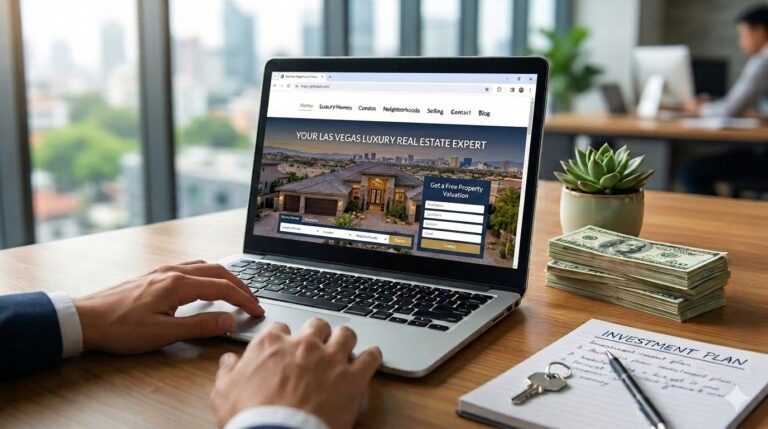
A real estate website can stop you cold when you see the price. One minute, you are thinking about growing your business. The next minute, you are staring at a number and wondering how a “website” could possibly cost that much. That reaction is fair. When the value has not yet been explained, the price can feel larger than the promise. But sticker shock only shows you the surface. It does not show you what is being built, what problems the website is meant to solve, or why the right foundation can continue to serve your business long after the initial decision is made. Before you decide whether the cost feels too high, it is worth slowing down and asking a better question: what are you actually paying for?
Why Does the Price of a Real Estate Website Feel So Hard to Judge?
The price feels hard to judge because a website is often described as one thing, even though it is made up of many working parts.
When someone says “website,” it can sound simple. You may picture a homepage, a few service pages, a contact form, and maybe a place for people to search for homes. From that perspective, the price can feel disconnected from what you think you are getting. It is easy to wonder why something that appears so straightforward on the front end requires a larger investment behind the scenes.
That confusion usually comes from the difference between what a visitor sees and what the website has to do. A real estate website has to support your brand, organize your services, guide visitors, host content, connect with search tools, generate leads, and give your business a stable online home. The visible design is only one layer. The structure behind the design is what determines whether the site can actually serve your business.
This is where many agents get stuck. They compare website pricing based solely on appearance because appearance is the easiest to evaluate quickly. If two websites both look clean, modern, and professional, it may seem like they should cost roughly the same. But the real difference often sits below the surface. One site may be built as a simple online presence, while another may be built as a long-term business platform.
A real estate website should not be judged only by the number of pages or the way it looks on launch day. It should be judged by what it is designed to support after launch, how much control it gives you, and whether it can grow with your marketing over time.
What Are You Really Buying When You Pay for a Real Estate Website?
You are buying a business foundation that gives your online presence structure, purpose, and room to grow.
A professional real estate website gives your business a place to live online with more control than a profile page, social media account, or borrowed platform can provide. That matters because your website becomes the place where your brand, content, listings, service information, lead opportunities, and client guidance can work together. Instead of scattering your marketing across disconnected spaces, your website gives your business a central location that belongs to you.
You are also paying for planning. A strong website is not built by randomly placing pages together and hoping visitors know where to go. The site needs a clear path. Buyers need to find home search tools, community information, and helpful buying guidance. Sellers need to understand your process, your value, and the next step for requesting help. Visitors need to know where they are, what they can do next, and how to contact you when they are ready.
The investment also includes the ability to build on the site over time. A real estate website should give you space for blog posts, neighborhood pages, landing pages, buyer resources, seller resources, market updates, and other content that helps your business stay visible and useful. That ongoing use is part of the value.
The website’s price is not tied solely to the day it launches. It is tied to the role the website can play in your business after launch. When the site is built on a stronger foundation, it can continue supporting your marketing, content, and client conversations long after the first version goes live.
Why Does Website Ownership Matter So Much for Real Estate Agents?
Website ownership matters because your content, visibility, and brand presence need a stable place that stays connected to your business.
Real estate agents often rely on platforms they do not fully control. A brokerage may provide an agent page. A social media platform may help you reach people. A third-party site may display your profile or listings. Those spaces can be useful, but they are not the same as owning your own website. When your online presence depends entirely on spaces controlled by someone else, your content and visibility are tied to rules, layouts, permissions, and priorities that can change.
A website you own gives your business a stronger long-term anchor. The content you publish has a place to stay. Your blog posts, community pages, buyer guides, seller resources, and service pages can continue working for your brand over time. If you change brokerages, refine your market, adjust your messaging, or expand your services, your website can move forward with you.
Ownership also gives you more control over how your business is presented. You can decide which communities to highlight, which topics to cover, how to explain your services, and how to guide visitors toward a conversation. Your website can reflect your local expertise and approach to helping clients, rather than conforming to a generic template that looks and feels like everyone else’s.
This control becomes especially important as your content grows. Every helpful page you publish can become part of a larger online presence. Over time, your website can become a library of useful information tied to your name, market, and business. That kind of long-term value is difficult to build when your content lives in places you do not control.
How Does a Real Estate Website Support Your Brand?
A real estate website supports your brand by giving buyers and sellers a clear, consistent place to understand who you are and how you help.
Your brand is shaped by the way people experience your business. That includes your design, messaging, photos, service pages, listing search, content, calls to action, and the overall feeling visitors get when they move through your site. A professional website brings those pieces together so your business feels organized and intentional.
For real estate agents, brand trust matters because buyers and sellers are making decisions that involve money, timing, family, lifestyle, and major life changes. They want to feel that the person guiding them is prepared, knowledgeable, and easy to reach. Your website helps create that impression before a phone call or appointment ever happens.
A website also adds depth to your brand. A logo and headshot can introduce you, but helpful content can show how you think, how you guide clients, and how well you understand your market. A buyer may first connect with your brand through a community page. A seller may begin trusting you after reading a pricing or preparation article. A relocating client may feel reassured by clear local information. These moments build familiarity before direct contact.
Consistency is another major part of branding. Your website gives every marketing channel a reliable place to send people. Social posts, email newsletters, listing flyers, business cards, video content, and Google Business Profile links can all point back to the same professional destination. That makes your marketing feel more connected.
The website becomes the place where your brand can be seen, understood, and remembered. It gives your business a polished home base that can support first impressions and ongoing relationships.
BREW Real Estate Website & Marketing Platform
Ballen Real Estate Websites were built by agents, for agents real-time in the field… and without any contracts!
What Role Does IDX Play in the Value of a Real Estate Website?
IDX gives your website practical value by allowing visitors to search active property listings directly through your site.
Property search is one of the biggest reasons buyers visit real estate websites. They want to see what is available, compare prices, review photos, explore locations, and understand the market hands-on. IDX helps make that possible on your own website, rather than sending visitors elsewhere to continue their search.
When IDX is part of your website, visitors can move from education to action in one place. Someone reading about a neighborhood can look at homes for sale in that area. Someone learning about the buying process can explore listings when curiosity turns into active interest. Someone who returns later can continue using your site as a search resource.
That matters because a property search can keep visitors engaged with your brand. Without IDX, your website may provide helpful information, but buyers may leave when they are ready to look at homes. With IDX, your site can support both research and browsing. That creates a stronger visitor experience because the website can answer questions and satisfy search intent within the same environment.
IDX also helps connect your local content to real-time interest. Community pages, neighborhood guides, and market-focused articles become more useful when visitors can easily explore available homes related to those topics. The content helps people understand an area, while the listing search helps them take the next step.
The value of IDX is not simply that listings appear on your site. The value comes from keeping property search connected to your online presence, your content, and your opportunities for lead capture.
Why Is Website Content Part of the Investment?
Website content is part of the investment because it adds depth, usefulness, and long-term search potential to your site.
A real estate website without strong content can look complete at first glance, but it has limited ability to educate visitors or build authority over time. Content is what helps your website answer the questions buyers and sellers are already asking. It gives people a reason to stay, read, search, return, and trust your guidance.
For buyers, content can explain topics such as closing costs, home inspections, financing steps, neighborhoods, moving timelines, and what to expect during the search process. For sellers, content can cover pricing, preparation, repairs, showings, negotiation, staging, and closing responsibilities. These topics matter because buyers and sellers often begin researching before they are ready to speak with an agent. Your website can meet them during that early stage.
Content also supports discoverability. Search engines need clear topics, useful information, organized pages, and relevant wording to understand what your website is about. A blog post, community page, or guide gives search engines another page to evaluate and gives visitors another possible entry point into your business. Over time, a consistent content library can help your website become a stronger resource.
The structure around the content matters too. Content needs categories, headings, internal links, readable formatting, and clear next steps. A professional website gives that content a place to live in an organized way. Without structure, even helpful content can feel scattered or difficult to navigate.
When you invest in a real estate website, you are also investing in the platform that holds your content strategy. The site gives your ideas, expertise, and local knowledge a durable home that continues to build value with each new page you publish.
How Do Lead Capture Features Add Long-Term Value?
Lead capture features add long-term value by giving interested visitors a clear way to move from browsing to connection.
Many website visitors are not ready to call when they first land on your site. They may be comparing neighborhoods, checking prices, reading about the process, or casually exploring what is possible. That does not mean the visit has no value. It means your website needs a way to support people who are interested but not ready for a direct conversation yet.
Lead capture creates that bridge. A visitor may request listing information, ask for a home search, download a helpful resource, request a home value estimate, or fill out a contact form. Each action gives your business an opportunity to continue the relationship beyond that single visit.
This is important because real estate decisions often take time. Buyers may research for months before they are ready to tour homes. Sellers may begin reading about pricing and preparation long before they list. A strong website gives those visitors multiple ways to take a smaller first step. That first step can become the beginning of a future client relationship.
Lead capture also helps organize interest. When inquiries come through your website, you can better understand what the visitor wanted and how to respond. A buyer asking about homes in a specific price range has a different need than a seller requesting information about property value. A good website helps create context for those conversations.
The value is not only in capturing contact information. The value is in giving your website a role in relationship-building. Instead of letting visitors leave with no next step, lead capture helps turn online attention into a trackable business opportunity.
Real Estate Website Content Services
Ballen Brands uses tested and proven methods in our blogs that have been proven to increase search engine ranking thus providing a higher opportunity for getting more leads on your website.
Why Do Technical Setup and Site Structure Affect the Value?
Technical setup and site structure affect value because a website must function well behind the scenes to serve visitors properly.
A website can look attractive yet still fall short if its underlying structure is weak. Pages need to load correctly. Menus need to make sense. Forms need to work. Property search tools need to display properly. Mobile pages need to be readable and easy to use. URLs need to be organized. Content needs a logical home. Calls to action need to appear where they make sense.
These pieces are easy to overlook because they are not always obvious from a quick glance. But they shape the way visitors experience your site. If someone cannot find what they need, the website feels frustrating. If a form fails, the opportunity may be lost. If the site feels cluttered, visitors may leave before they understand what you offer.
Site structure also affects how your website grows. A real estate website may start with a certain number of pages, but your needs can expand. You may want to add community pages, buyer guides, seller guides, blog posts, market updates, landing pages, or service pages. A stronger structure makes that growth easier because the site already has an organized framework.
Technical setup also supports your publishing workflow. If your website is built so that content can be added, updated, optimized, and connected over time, it becomes easier to use for your marketing. That matters because a real estate website should keep working after launch.
The value of a professional site is partly in the parts visitors never think about. When those parts are done well, the website feels smooth, trustworthy, and easy to navigate. When they are missing or poorly handled, the entire experience can suffer.
How Does a Website Help Connect Your Marketing?
A website connects your marketing by providing a single reliable place for every platform, campaign, and conversation.
Real estate marketing often happens across several channels. You may use social media, email, video, business cards, listing flyers, open house materials, Google Business Profile, text messages, and referral conversations. Each one can create awareness, but awareness needs a destination. Your website gives people that destination.
This matters because scattered marketing can create scattered attention. A social media post may get engagement for a short time. An email may be opened once. A flyer may be saved or thrown away. A video may spark interest, but the viewer still needs a next step. Your website gives those moments a place to continue.
For example, a post about buyer closing costs can lead to a full educational blog. A short video about preparing a home for sale can lead to a seller resource page. A neighborhood spotlight can lead to a community guide with homes for sale. A business card can send someone to a site where they can learn about your services and search for homes.
Your website also helps keep your messaging consistent. Instead of having each channel operate separately, your site can reinforce your brand, service areas, contact information, and calls to action. That creates a stronger experience for people who encounter your business in different places.
A professional real estate website gives your marketing a center. It helps your other efforts work together instead of leaving each piece to stand alone. That is a major part of the investment because the website can support your business across multiple channels at once.
Why Does Ongoing Usability Matter After Launch?
Ongoing usability matters because your website needs to keep serving your business after the first version goes live.
Launch day is only the beginning of a real estate website’s usefulness. Your business will keep moving. Listings will change. Market conditions will shift. Client questions will evolve. Communities will grow. You may add content, adjust messaging, update services, or focus on new areas. A website with ongoing usability gives you room to keep adapting.
For visitors, usability means the site feels easy to move through. They can search for homes, read helpful information, find contact options, explore communities, and understand what to do next. The site should work well on desktop and mobile devices, as visitors may come from anywhere. A strong user experience helps visitors feel comfortable staying on the site and engaging with your content.
For your business, usability means the website can be maintained and expanded. You may need to publish new blog posts, update older content, add pages, revise calls to action, adjust forms, or connect additional tools. A professional website should make those updates possible without requiring a complete rebuild every time your needs change.
This long-term flexibility is a major part of the value. A website that only looks good at launch can lose usefulness quickly if it cannot grow. A website built for ongoing use can continue supporting your marketing, content, search visibility, lead capture, and client education over time.
The best website investment is not only about getting online. It is about having a platform that remains useful as your business grows. That continued usefulness helps turn the website from a one-time project into a working business asset.
How Can Ballen Brands Help You Build a Stronger Real Estate Website?
Ballen Brands helps you build a stronger real estate website by creating a WordPress-based platform designed to support real estate search, content, lead capture, and long-term business growth.
A Ballen Real Estate Website (BREW) gives you a professional online home built around the way real estate agents actually use their websites. The site is built on WordPress, which gives you ownership, flexibility, and space to grow your content over time. That matters when you want your website to support blogs, community pages, buyer resources, seller resources, landing pages, and long-term search visibility.
IDX Broker can be included so visitors can search homes directly from your website. This keeps the property search experience connected to your brand and gives buyers a practical reason to use your site. Listings to Leads can also support lead capture through landing pages, property tools, and offers that encourage visitors to take the next step.
Ballen Brands also builds with Yoast SEO available inside WordPress. Yoast SEO helps guide on-site optimization as you publish and refine content, including titles, descriptions, readability prompts, and other page-level signals that support a cleaner publishing process.
For agents who want additional support, optional tools such as Clicky Analytics and Keap CRM can help create a stronger system around the website. Clicky can make website activity easier to understand, while Keap can support more organized email and text follow-up when a more advanced CRM process is needed.
A real estate website should give your business a place to grow, publish, capture leads, and support conversations with buyers and sellers. Ballen Brands builds websites with that larger purpose in mind.
For a free, no-obligation consultation, reach out to Ballen Brands at Team@BallenBrands.com or call (702) 917-0755.
BREW Real Estate Website & Marketing Platform
Ballen Real Estate Websites were built by agents, for agents real-time in the field… and without any contracts!